Carbon Steel and Sunday Smoke
In the rice country west of Valencia, the carbon-steel paellera is less a cooking vessel than an heirloom - seasoned by decades of wood smoke, passed between generations, and tied to a way of cooking that resists improvement.
In the villages that fan out west of Valencia, toward the rice fields of the Albufera, the paellera is not really thought of as cookware. It is closer to an inheritance - a wide, shallow, carbon-steel pan, blackened by decades of olive oil and orange-wood smoke, often older than the cook holding the handle. Pans bought in the middle of the last century are still in regular Sunday use.
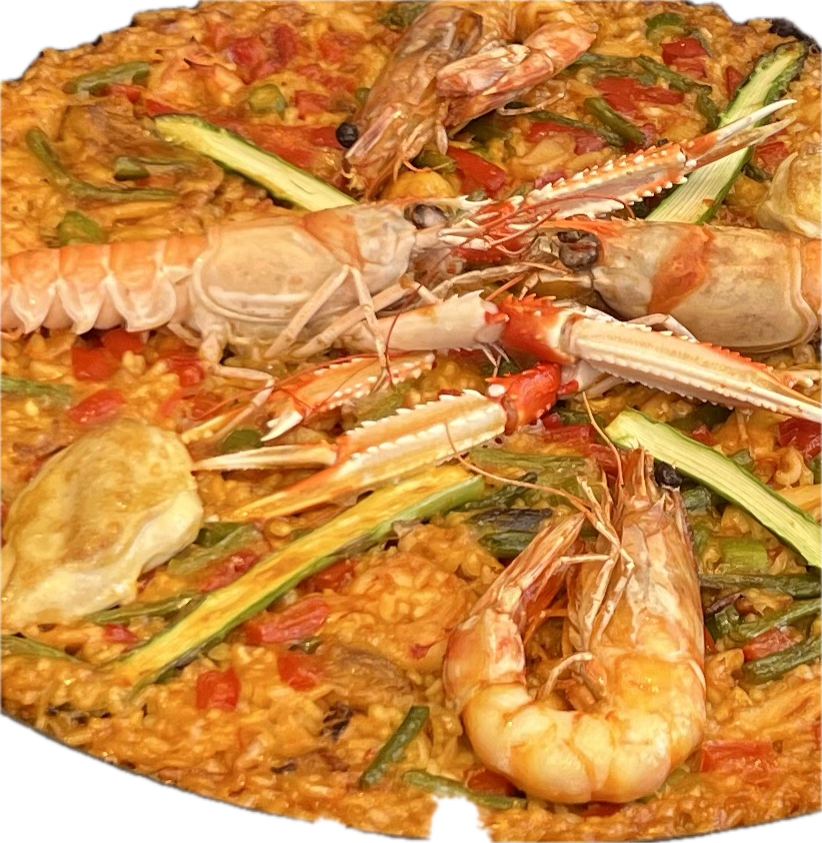
Paella, as understood here, is a dish of the inland countryside, not the coast. The traditional Valencian version, recognized by Spain's Denominación de Origen for the rice grown in the Albufera wetlands, calls for rabbit and chicken, flat green beans called ferraura, the large white beans called garrofón, grated ripe tomato, sweet paprika, saffron, rosemary, and a short-grain rice - bomba or senia - capable of absorbing several times its volume in stock without losing its shape. Seafood paella exists, but it belongs to a different tradition and a different shoreline.
What the carbon-steel pan provides is geometry. Its wide, shallow shape exposes a large surface area of rice to direct heat, which is what allows the socarrat to form: the thin, caramelized crust on the bottom of the pan that most Valencian cooks consider the best bite of the dish. A deeper pot does not produce it, and a nonstick pan does not either. The metal has to be thin enough to conduct heat aggressively and seasoned enough that the rice releases cleanly.
Cooking over orange or vine wood is still common in the countryside, and it is not done for nostalgia alone. The open fire delivers heat unevenly across the pan, and the cook nudges the pan across the flame so that every section of rice gets its turn directly over the hottest coals. The faint smoke that rises into the grain is part of a flavor profile that gas burners do not replicate.
The technique is consistent across households, even when the proportions are not. Oil is heated in the cold pan until it shimmers. The meat is browned, then the vegetables, then the paprika, added off-heat for a moment so it does not scorch. Hot stock is poured in. Rice is added and distributed with a shake of the pan rather than a stir, and once the rice goes in, tradition holds that it should not be moved again. Saffron and a sprig of rosemary finish the surface. Twenty minutes or so later, the pan rests under a clean cloth before serving.
The pans themselves require very little: a wipe with oil after each use, storage somewhere dry, and a refusal to scrub them aggressively. The patina that builds up over years is part of what cooks the next paella. A new pan is functional. A pan that has been in a family for fifty years is a record, in carbon and oil, of every Sunday it has seen.
Lighter pans exist, nonstick versions exist, induction-compatible versions exist. None of them produce the same rice. The original tool, in this case, was already the right one.
— The Editors
Connected in soul to twfim. Discoveries told through the table.