Reading a Moroccan Spice Stall
The cone-shaped mounds of color that define Moroccan spice stalls are a marketing display, not a storage system. Knowing what the spices actually do - and how they are used - is the difference between a souvenir and a kitchen.
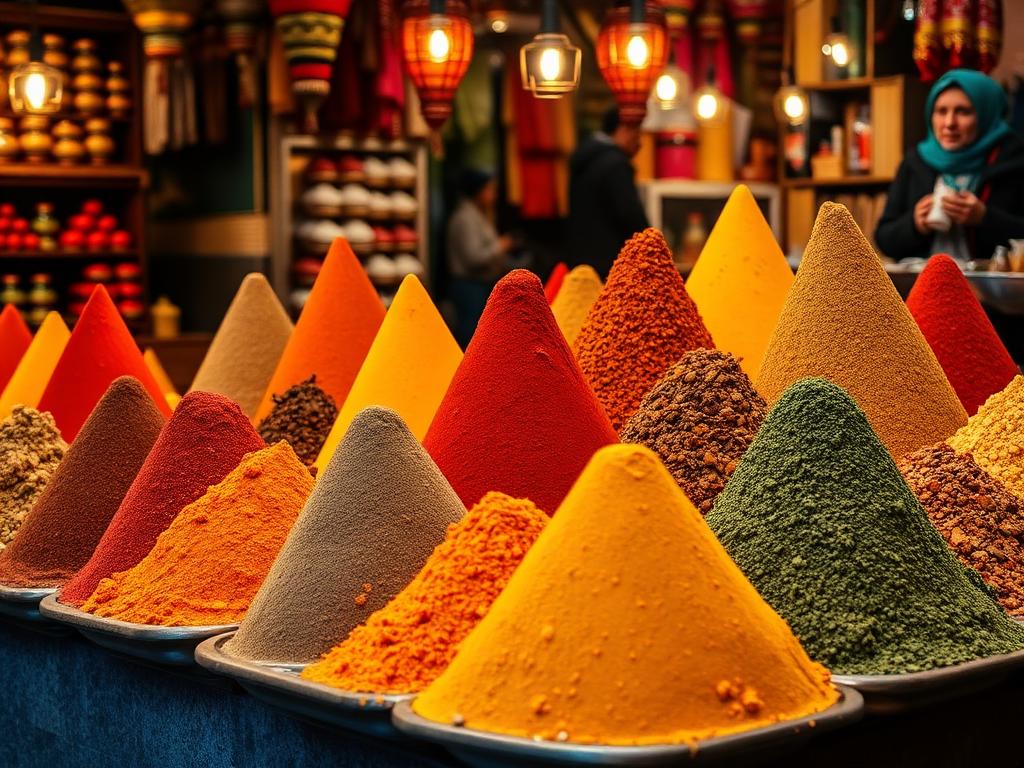
The spice stalls of the Marrakech medina are, visually, one of the most photographed scenes in North Africa: dozens of conical mounds of powder in red, ochre, yellow, brown, and green, stacked on open trays under awnings. The image is real, but the cones are largely a display convention - the working stock is kept in sacks behind the counter, sold by weight and ground or blended to order.
Moroccan cuisine draws on a relatively defined palette of spices, most of which appear in the country's two best-known dish categories: tagine (slow-cooked stews named after the conical clay vessel they are cooked in) and couscous. Understanding the palette is the easiest way to read a stall.
Cumin (kamoun) is ubiquitous, both ground into dishes and served alongside grilled meats as a table condiment with salt. Coriander seed and fresh coriander leaf both appear constantly. Ginger (skinjbir), usually dried and ground rather than fresh, is a base note in most tagines. Sweet paprika and cayenne provide color and gentle heat; Moroccan food is fragrant rather than fiery. Cinnamon appears in both savory and sweet contexts - most famously in pastilla, the sweet-savory pigeon or chicken pie dusted with cinnamon and powdered sugar.
Saffron (zaâfran) is grown in the Taliouine region in the south of the country and is genuinely used in cooking, not just sold to tourists. Real saffron is sold by the gram and is expensive everywhere; very cheap "saffron" in a market is usually safflower (qartam), which is yellow but flavorless, or turmeric. The distinction is worth asking about before buying.
The signature blend is ras el hanout, which translates roughly as "head of the shop" - meaning the seller's best mix. There is no fixed recipe. Each spice merchant blends their own, and a serious ras el hanout can contain twenty or thirty ingredients, including cardamom, mace, nutmeg, allspice, rose petals, lavender, and dried galangal. Buying it pre-made is normal; buying it from a stall that grinds it in front of you is better.
Preserved lemons and olives are typically sold at the same stalls or nearby, even though they are not technically spices. Both are essential to the chicken tagine that is, alongside lamb with prunes, the dish most associated with the country abroad.
The practical advice for cooking from such a stall: buy small quantities, buy whole rather than ground where possible (cumin and coriander especially), and ask the seller how they would use it. Moroccan spice merchants are, in general, generous with that information. The cones are for the camera. The knowledge is what's actually for sale.
— The Editors
Connected in soul to twfim. Discoveries told through the table.