Paella Valenciana
In its home region, paella is not a category of rice dish but a specific recipe with a specific shape, a specific list of ingredients, and a specific way of being eaten. Understanding why those rules exist is most of the way to understanding the dish.
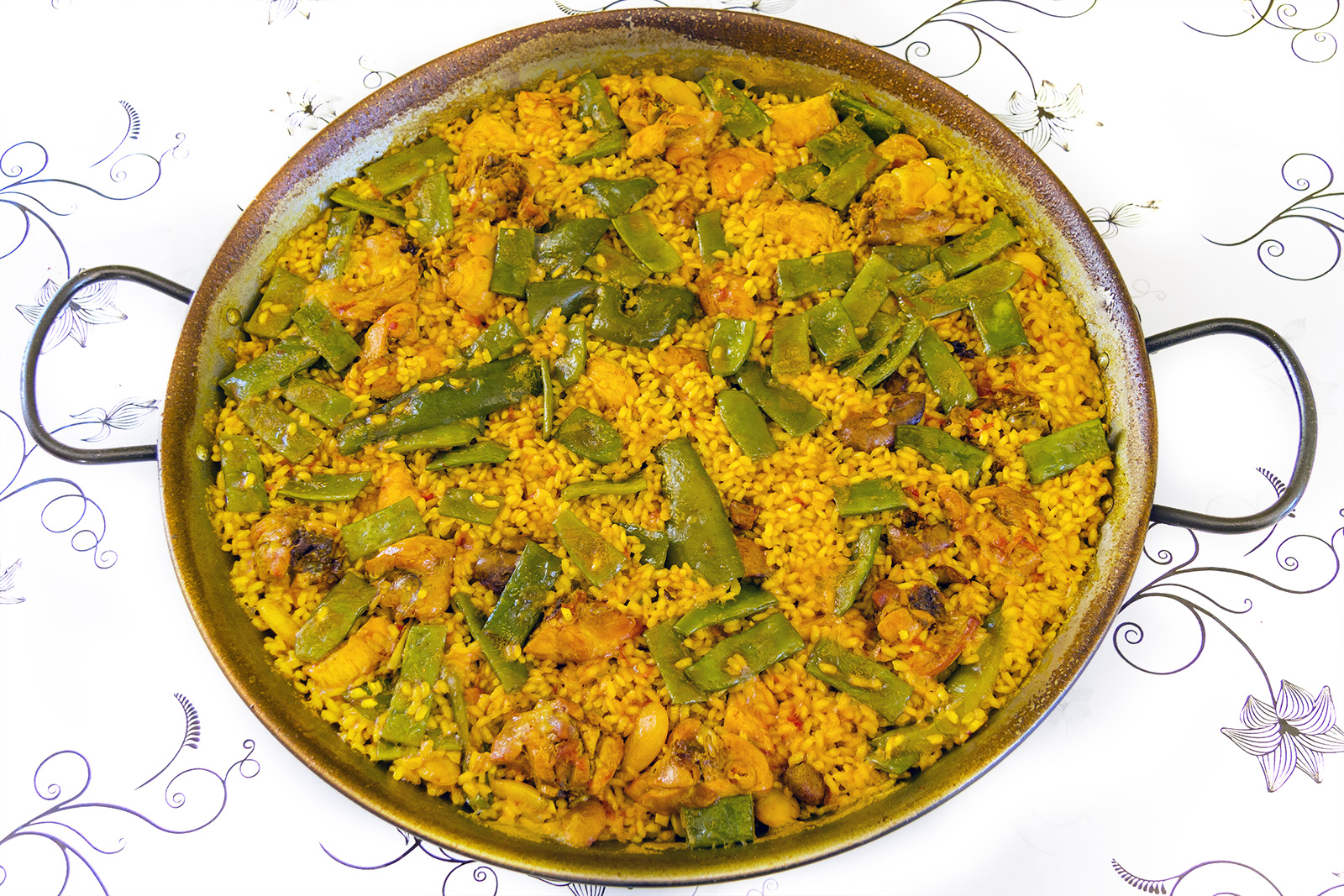
Paella is, in much of the world, treated as a flexible idea - a yellow rice dish, often with seafood, sometimes with chorizo, sometimes with peas. In Valencia, where the dish originated in the rice-growing wetlands of the Albufera in the nineteenth century, it is a single, specific recipe, and the deviations are a source of well-documented regional irritation.
The traditional Valencian paella, as codified by local cooks and recognized by the Wikipedia-cited consensus of regional chefs, is built from a defined list: short-grain rice (typically bomba or senia, both grown in the Albufera), rabbit, chicken, flat green beans (ferraura), large white beans (garrofón), grated ripe tomato, olive oil, sweet paprika, saffron, rosemary, and water or light stock. Snails are common in the inland version. Seafood is not part of the original recipe; it belongs to a separate coastal tradition that emerged later.
Chorizo, despite its frequent appearance in international versions, is firmly outside the canon. Its inclusion is a long-running point of regional humor - and frustration - in Valencia.
The structural rules matter as much as the ingredient list. Paella is cooked in a paellera, a wide and shallow carbon-steel pan whose geometry is essential to the dish: the broad surface area allows the rice to cook in a thin layer, which is what produces the socarrat, the caramelized crust on the bottom that is considered the best part. The rice is distributed once and then not stirred again - a rule that distinguishes paella from risotto. The pan is rested under a cloth before serving and is brought to the table as the serving vessel itself, with diners traditionally eating from the edge inward, using their own spoons, from the section closest to them.
The dish is, by tradition, a midday meal - usually a Sunday lunch, often cooked outdoors over orange or vine wood, often by men in households that otherwise cook differently the rest of the week. Its social shape is as fixed as its ingredient list: a long table, a single pan in the center, a meal that takes hours not because it is complicated to cook but because it is meant to be eaten slowly.
The rules can read as gatekeeping, but they make more sense understood functionally. The pan shape produces the socarrat. The short-grain rice absorbs the stock without going to mush. The no-stir rule allows the bottom layer to caramelize. The ingredient list reflects what the inland Valencian farmer had on hand: rabbit, snails, beans from the field, rice from the paddy, saffron and paprika from the trade routes. Every element has a practical reason behind it.
— The Editors
Connected in soul to twfim. Discoveries told through the table.